CMS-Structured Member Journeys


Association Case Study

UX Strategy → CMS-Structured Member Journeys

Overview

During an association’s migration to a new CMS (Optimizely), member-facing digital experiences were being rebuilt across the site without a consistent user experience framework to guide page structure. At the same time, the organization was advancing a New Member Journey initiative intended to better support onboarding, engagement, and long-term certification pathways. These parallel efforts created a critical opportunity to align experience strategy with implementation at the CMS level.
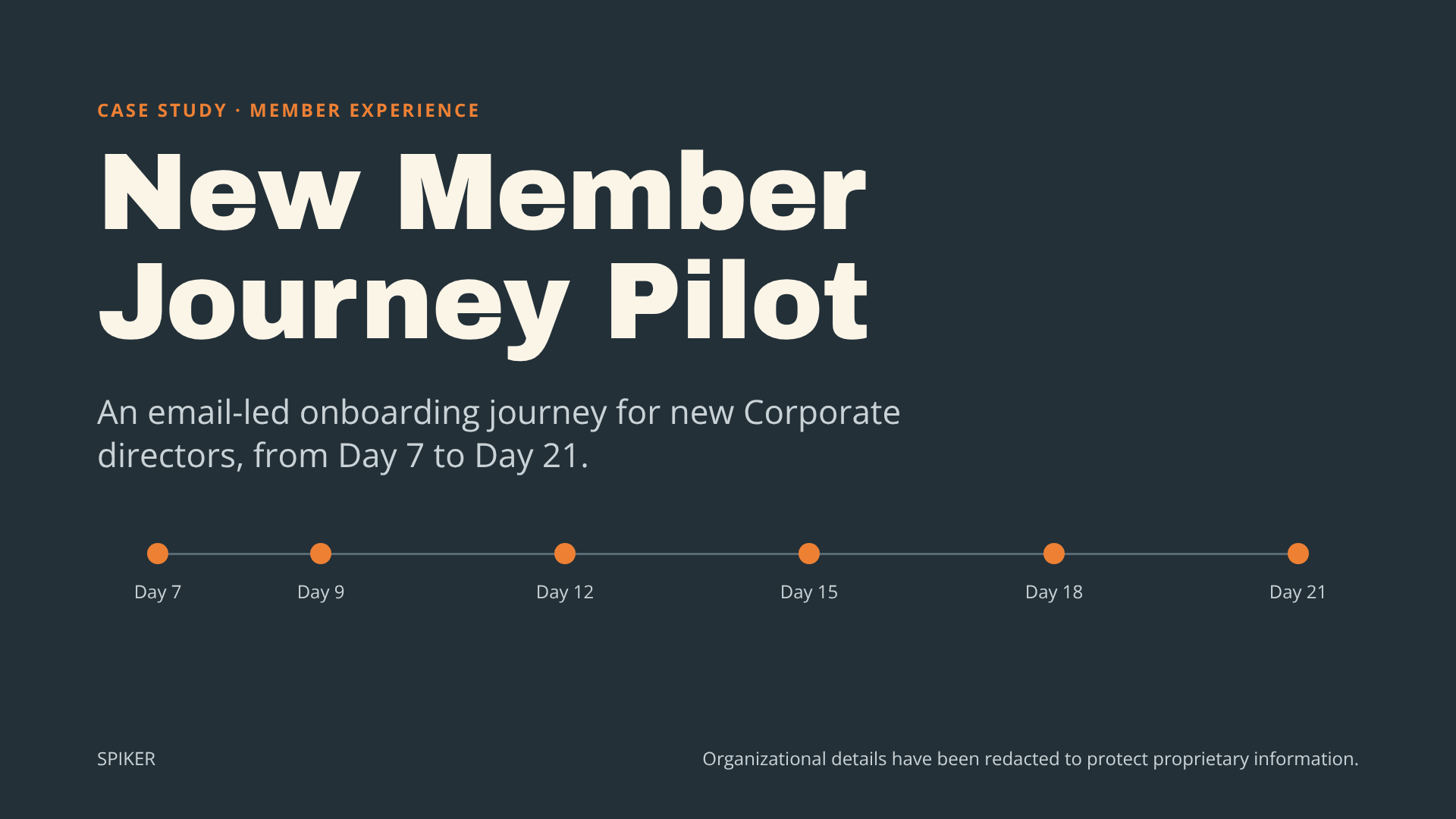
Title slide: New Member Journey Pilot. An email-led onboarding journey for new Corporate directors, from Day 7 to Day 21.
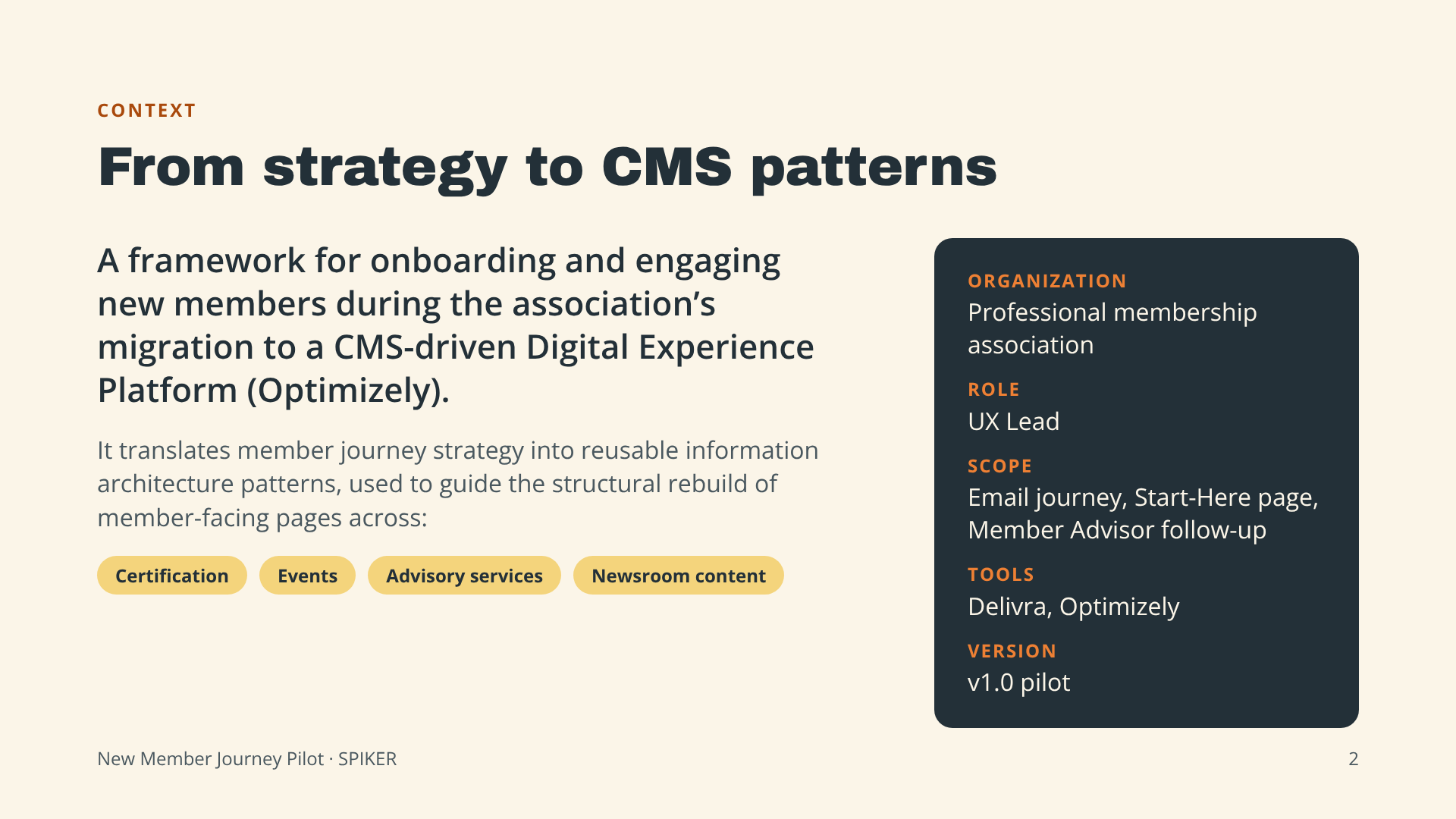
Context: from strategy to CMS patterns. A framework for onboarding and engaging new members during a professional membership association's migration to a CMS-driven Digital Experience Platform (Optimizely). Role: UX Lead. Scope: email journey, Start-Here page and Member Advisor follow-up. Tools: Delivra and Optimizely.
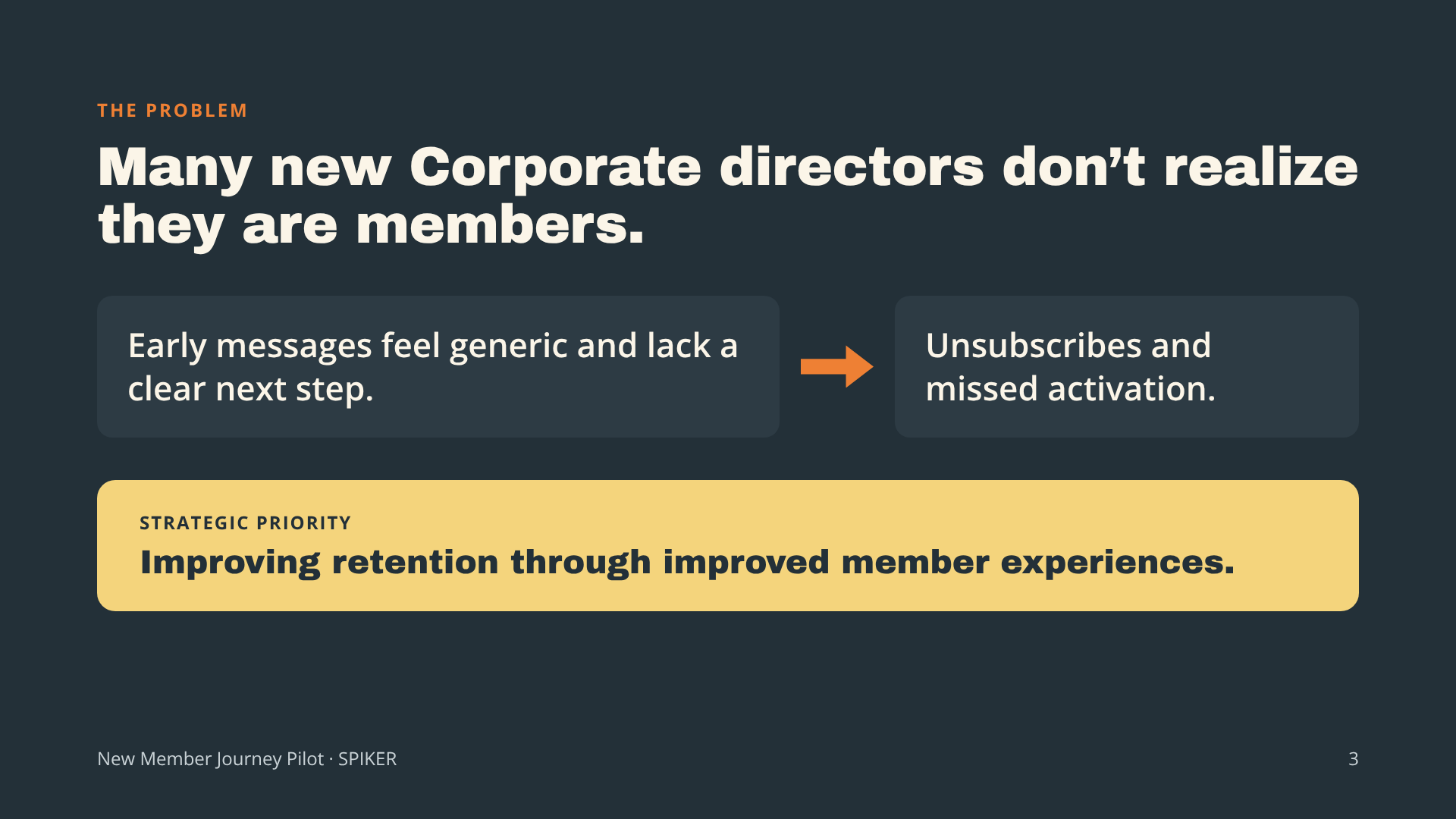
The problem: many new Corporate directors don't realize they are members. Early messages feel generic and lack a clear next step, which leads to unsubscribes and missed activation. Strategic priority: improving retention through improved member experiences.
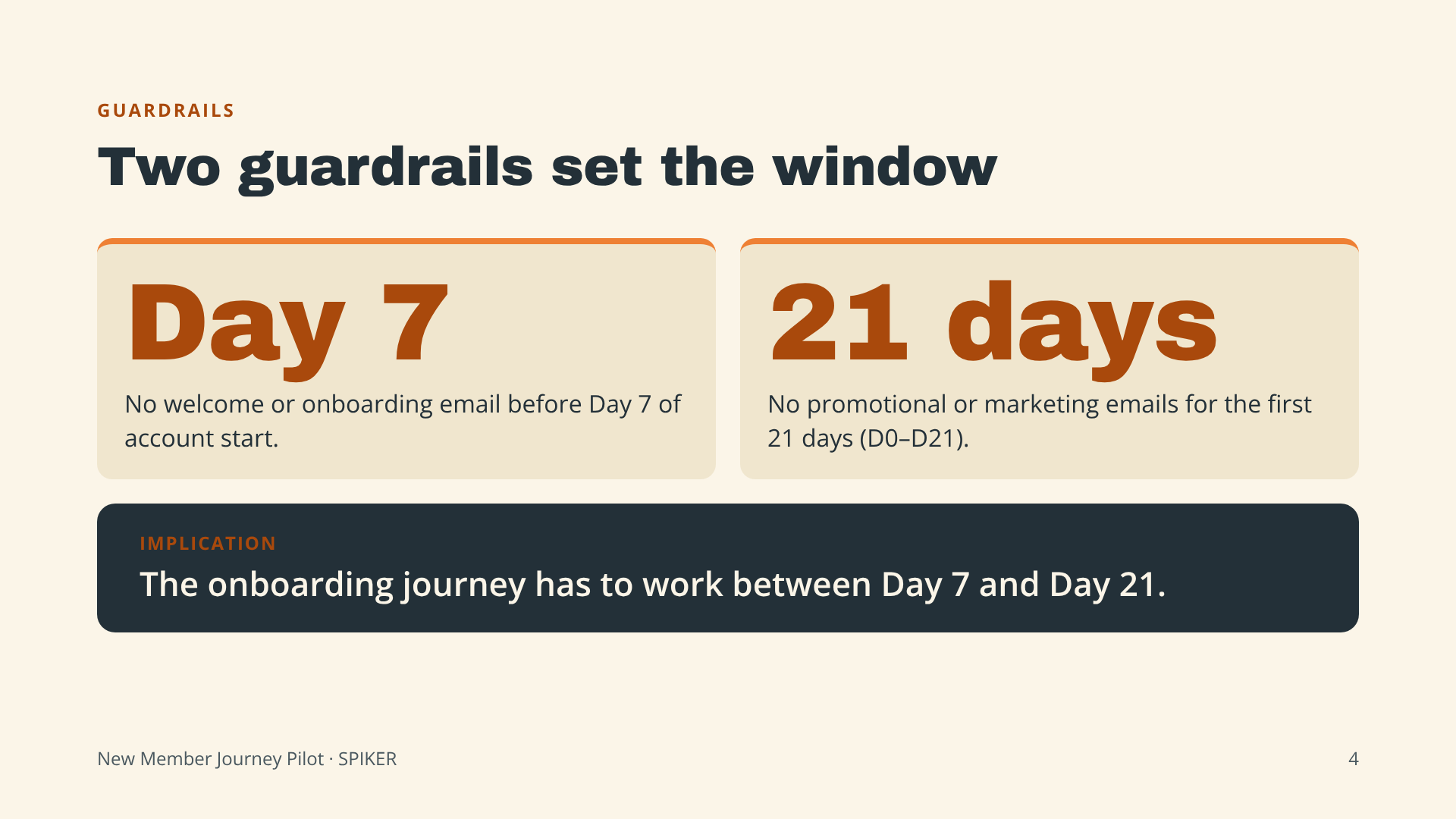
Two guardrails set the window. Day 7: no welcome or onboarding email before Day 7 of account start. 21 days: no promotional or marketing emails for the first 21 days. The onboarding journey has to work between Day 7 and Day 21.
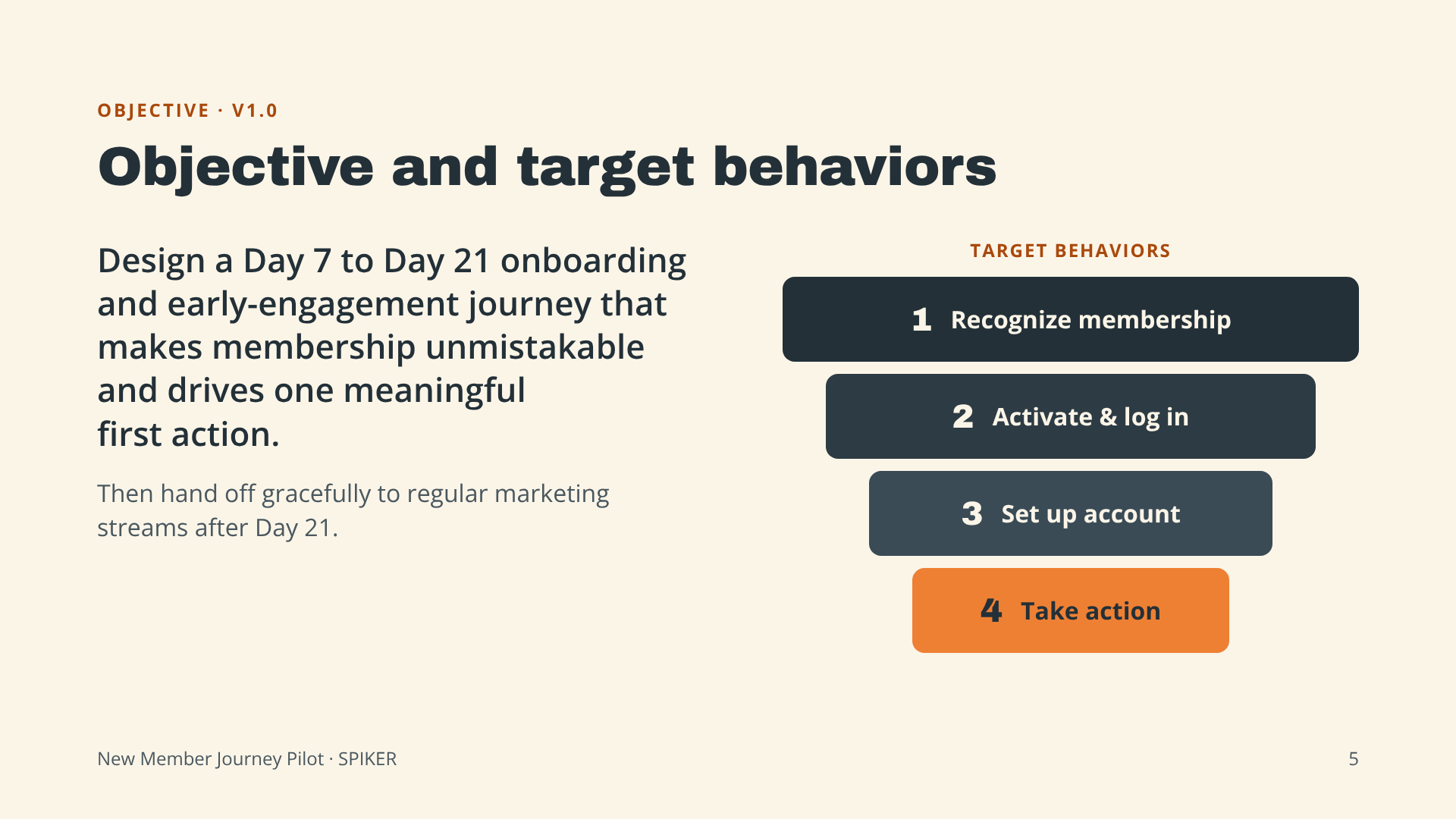
Objective and target behaviors. Design a Day 7 to Day 21 onboarding and early-engagement journey that makes membership unmistakable and drives one meaningful first action. Target behaviors, in order: recognize membership, activate and log in, set up account, take action.
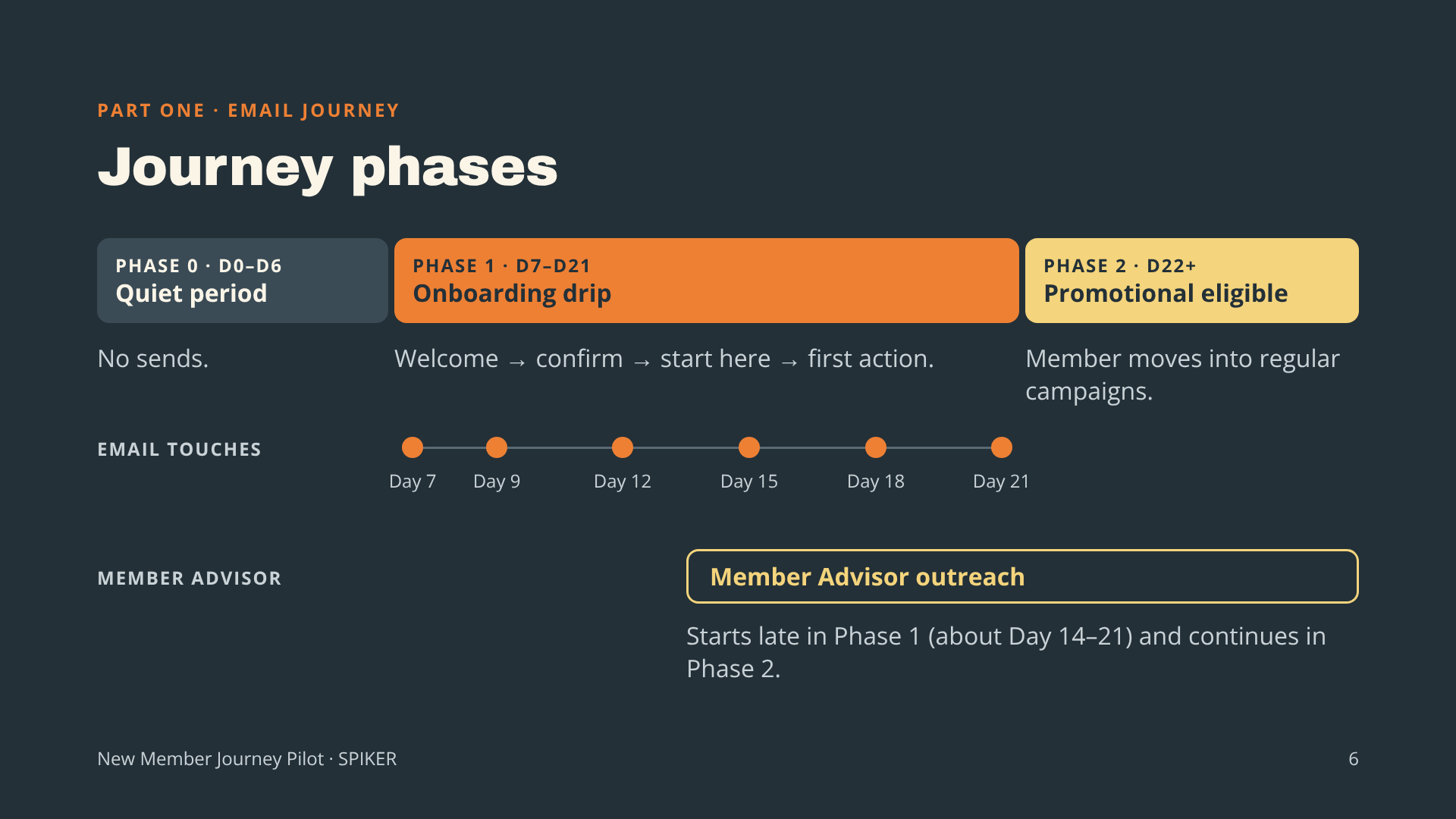
Journey phases. Phase 0, Day 0 to 6: quiet period, no sends. Phase 1, Day 7 to 21: onboarding drip, with email touches on Days 7, 9, 12, 15, 18 and 21. Phase 2, Day 22 onward: promotional eligible. Member Advisor outreach starts late in Phase 1 and continues in Phase 2.
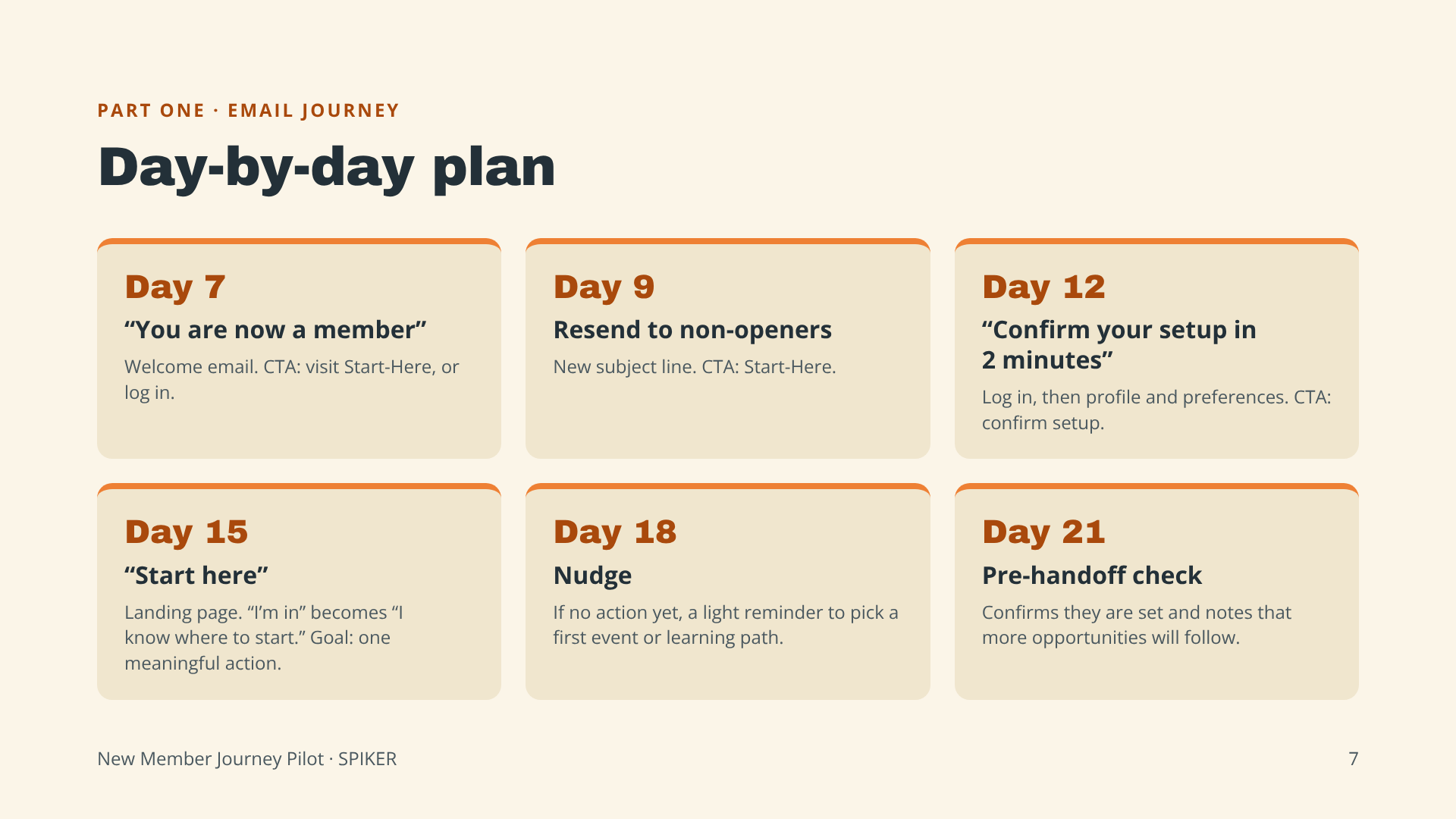
Day-by-day plan. Day 7: 'You are now a member' welcome email. Day 9: resend to non-openers. Day 12: 'Confirm your setup in 2 minutes'. Day 15: 'Start here' landing page. Day 18: nudge. Day 21: pre-handoff check.
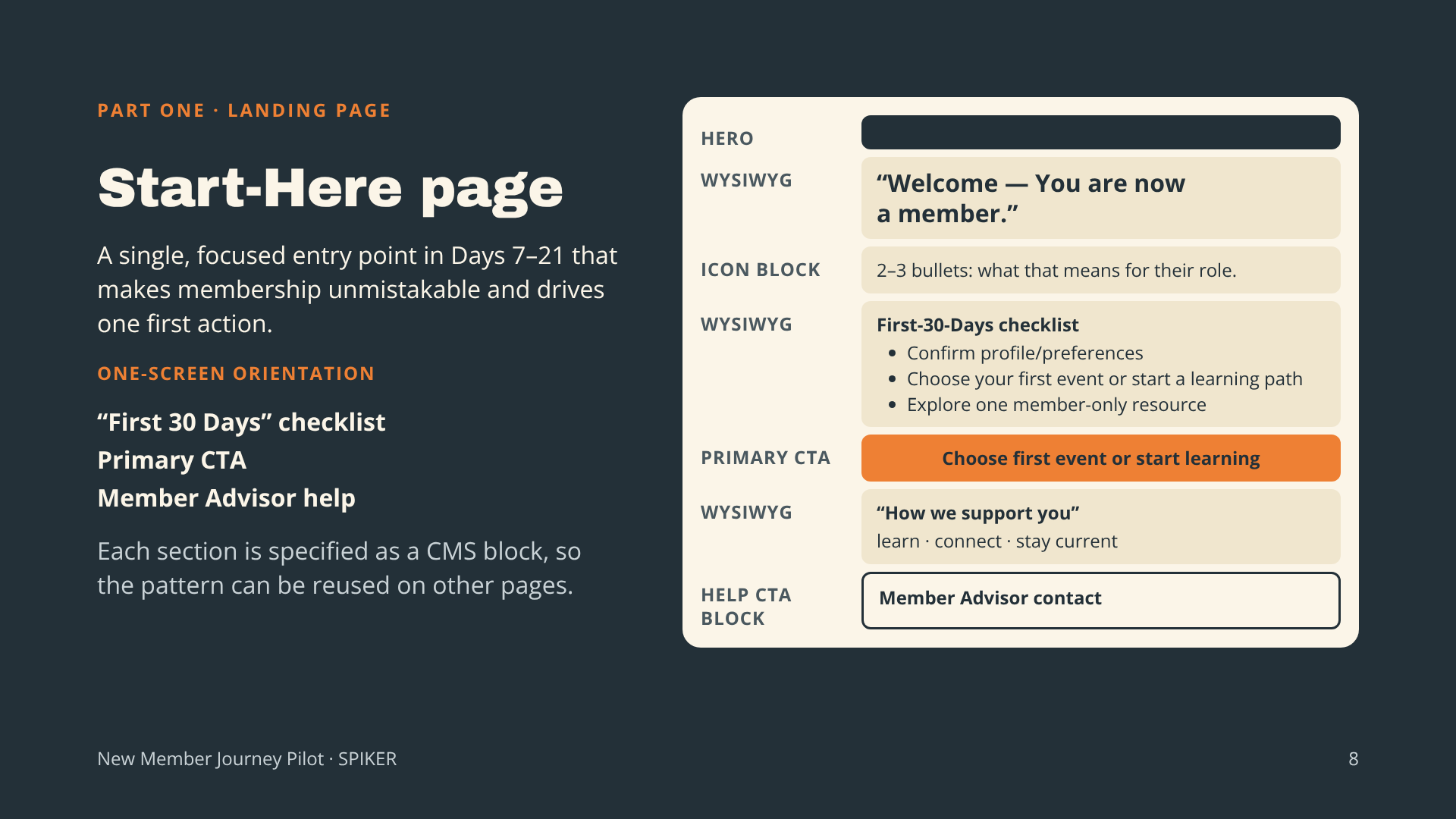
Start-Here page, specified as reusable CMS blocks: hero, welcome message, icon block, First-30-Days checklist, primary call to action, a 'How we support you' block and a Member Advisor contact block.
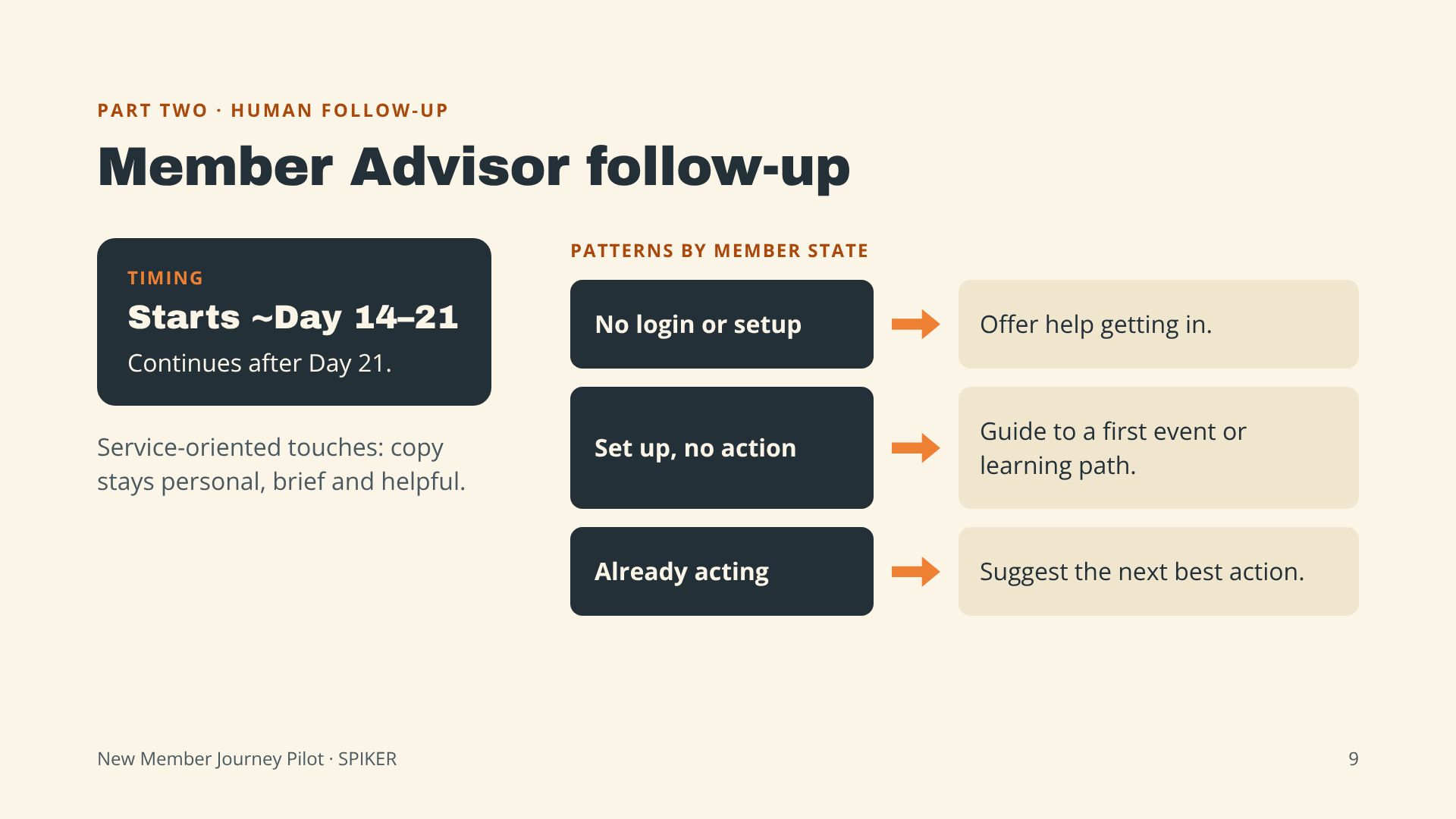
Member Advisor follow-up, starting around Day 14 to 21 and continuing after Day 21. Patterns by member state: no login or setup, offer help getting in; set up but no action, guide to a first event or learning path; already acting, suggest the next best action.
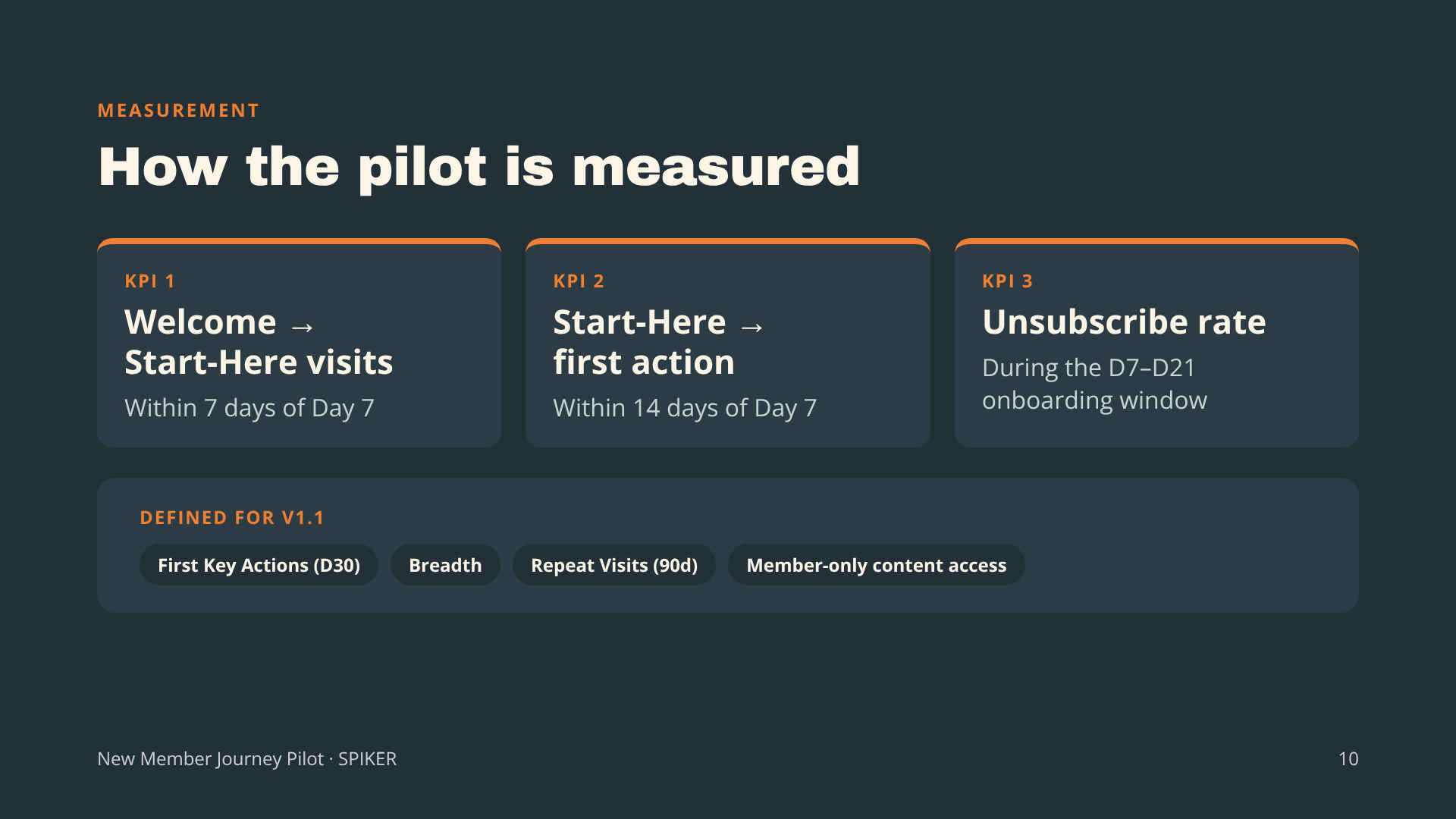
How the pilot is measured. KPI 1: welcome to Start-Here visits within 7 days of Day 7. KPI 2: Start-Here to first action within 14 days of Day 7. KPI 3: unsubscribe rate during the Day 7 to Day 21 window. Defined for v1.1: first key actions (D30), breadth, repeat visits (90 days) and member-only content access.
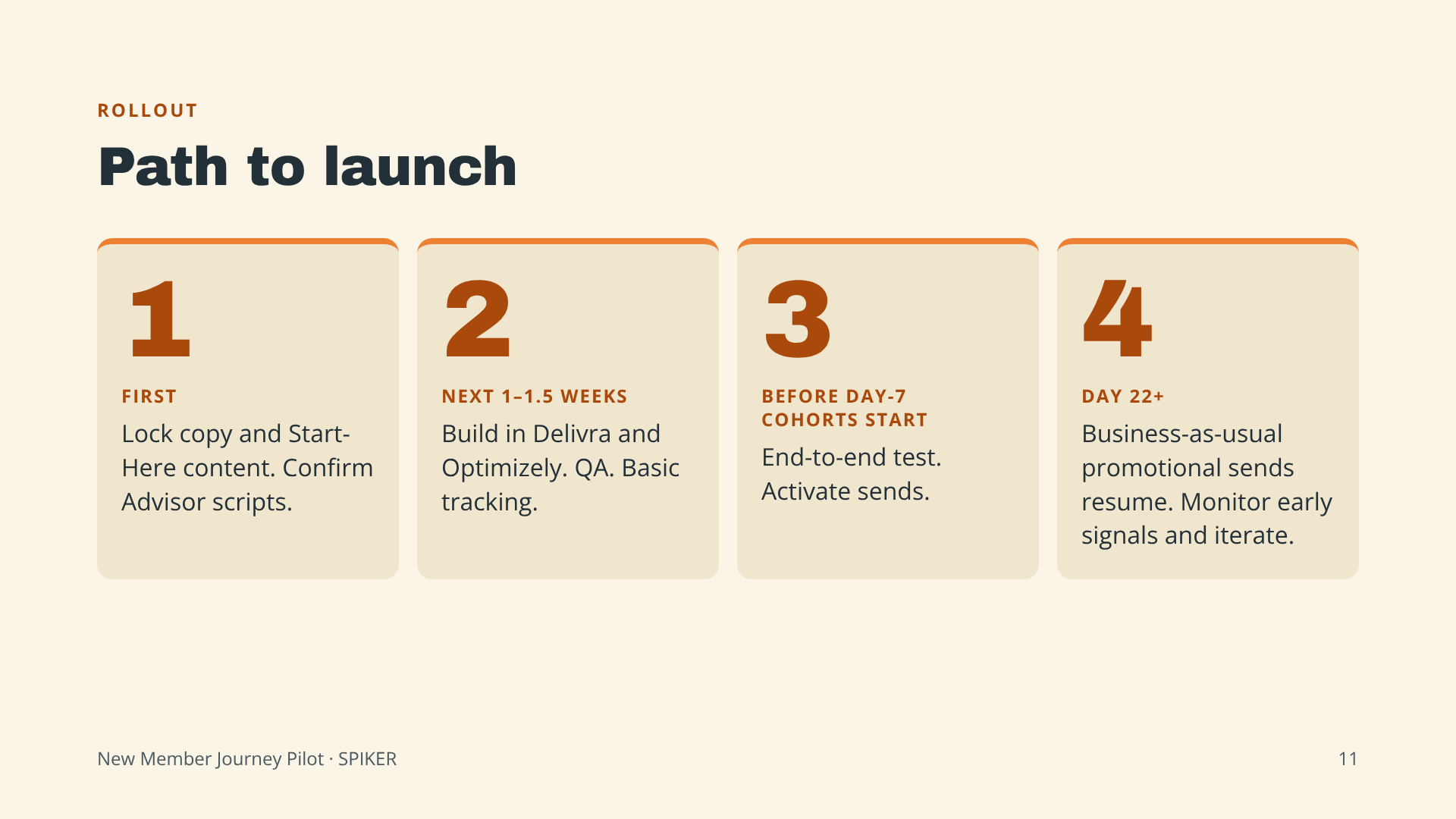
Path to launch. 1: lock copy and Start-Here content, and confirm Advisor scripts. 2: build in Delivra and Optimizely over the next one to one and a half weeks, with QA and basic tracking. 3: before Day-7 cohorts start, test end to end and activate sends. 4: from Day 22, promotional sends resume; monitor early signals and iterate.
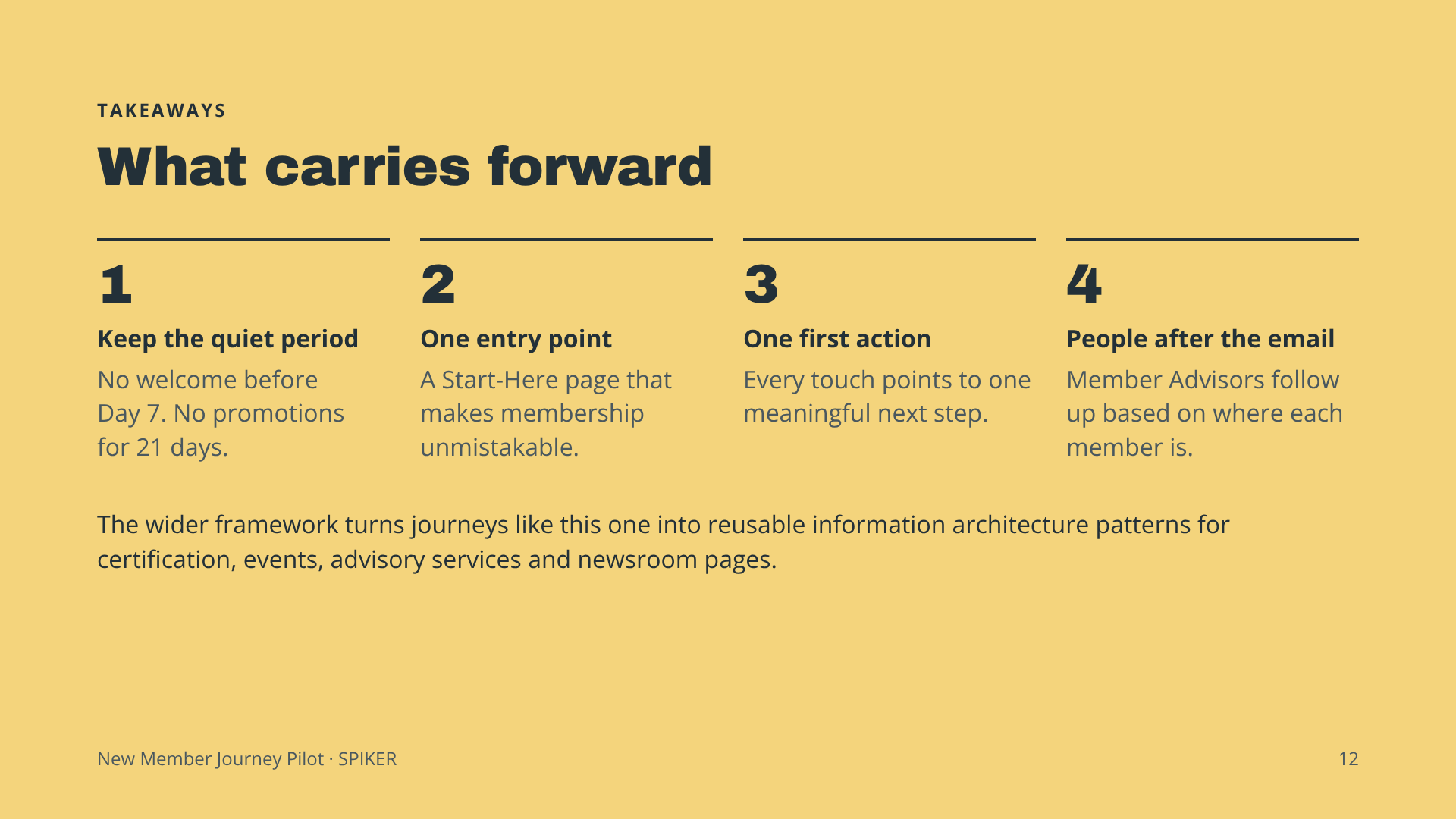
What carries forward: keep the quiet period; one entry point; one first action; people after the email. The wider framework turns journeys like this one into reusable information architecture patterns for certification, events, advisory services and newsroom pages.


The UX Lead translated the objectives of the New Member Journey into reusable information architecture patterns that could be applied across member-facing pages during migration. Rather than allowing campaign, certification, and advisory content to be reassembled in a content-first manner within the new platform, the UX Lead introduced a CMS-aware wireframing approach that structured page sections around user intent and progressive disclosure.

This methodology enabled marketing and business teams to author pages in Optimizely using experience-led sequencing, improving consistency across onboarding, certification, event, and advisory journeys. Section-level wireframes were developed to guide the rebuild of key experiences and establish a shared structural logic for how member pathways should be expressed within the CMS environment.

The resulting patterns improved clarity during page build, reduced variability across in-market experiences, and helped ensure that the migration to Optimizely supported—not disrupted—the member journey.